Detailed Introduction to Folk Costumes of Nujiang
I. Lisu (傈僳族) Costumes — The Regional Core
The Lisu people dominate Nujiang’s demographic and visual identity.
1. Women’s Traditional Dress
Structure
Long, side-opening gown (often ankle-length)
Brightly striped or patchwork fabric
Embroidered belt
Beaded chest decoration
Headscarf
Visual Characteristics
Multicolored horizontal stripes (red, green, yellow, blue, black)
Strong geometric rhythm
Dense textile layering
Decorative silver or aluminum ornaments
The Lisu striped textile is one of the most recognizable ethnic fabrics in China.
2. Subgroup Variation
Nujiang Lisu are commonly divided into subgroups often described (historically) by hat color distinctions:
“Black Lisu”
“White Lisu”
“Flowery Lisu”
These designations reflect variations in:
Headdress style
Textile stripe patterns
Ornament density
3. Lisu Men’s Clothing
Short jacket
Loose trousers
Shoulder bag
Historically carried knife
Simple dark color palette
Men’s attire emphasizes mobility for hunting and mountain agriculture.
II. Nu (怒族) Costumes
The Nu people inhabit remote mountain valleys along the Nu River.
Women’s Dress
Dark blue or black long gown
Narrow striped apron
Beaded necklace layers
Headcloth wrap
Nu garments are comparatively restrained but elegant, emphasizing vertical silhouette.
Decorative Elements
Fine embroidery on collar and cuffs
Silver earrings
Color accents in belts
III. Dulong (独龙族) Costumes
The Dulong live in the isolated Dulongjiang valley near the Myanmar border.
Women’s Traditional Attire
Handwoven striped blanket-like garment
Wrapped body style
Minimal tailoring
Heavy bead necklaces
Historically, Dulong women practiced facial tattooing (now discontinued), which was part of broader identity expression alongside clothing.
Dulong textiles are thick and adapted to cold, high-altitude conditions.
IV. Pumi (普米族) Costumes
Pumi communities in Nujiang display Tibetan-influenced characteristics.
Women’s Dress
Long robe-style garment
Pleated skirt
Embroidered belt
Headwrap
Color schemes often include:
Dark blue
Red trim
Earth tones
V. Materials & Textile Techniques
1. Fabrics
Handwoven cotton
Wool (higher elevations)
Hemp (historically)
Natural dyes
2. Weaving
Nujiang is especially known for:
Backstrap loom weaving
Stripe pattern construction
Thick durable mountain textiles
3. Ornamentation
Glass beads
Silver jewelry
Aluminum decorations
Embroidery
Compared to southern Yunnan, batik is uncommon here.
VI. Environmental Adaptation
Nujiang’s extreme terrain includes:
Deep river gorges
High mountain ridges
Limited flat land
Cold winters at altitude
Costume adaptations include:
Layered construction
Thick woven cloth
Long gowns for warmth
Durable stitching
Striped textiles are not only decorative but structurally reinforce garments.
VII. Religious Influence
Nujiang’s ethnic groups practice:
Animism
Christianity (strong among Lisu communities)
Tibetan Buddhism (Pumi areas)
Christian Lisu communities often incorporate modest dress norms while preserving traditional textile aesthetics.
VIII. Festivals & Ceremonial Wear
Traditional dress appears prominently during:
Kuoshi Festival (Lisu New Year)
Harvest festivals
Church gatherings (Lisu Christian communities)
Weddings
Torch Festival (some groups)
Festival versions of clothing are brighter and more ornamented.
IX. Symbolism & Social Meaning
Costume communicates:
Clan affiliation
Subgroup identity
Marital status
Wealth (through bead and silver quantity)
Geographic origin
&nb
Guide
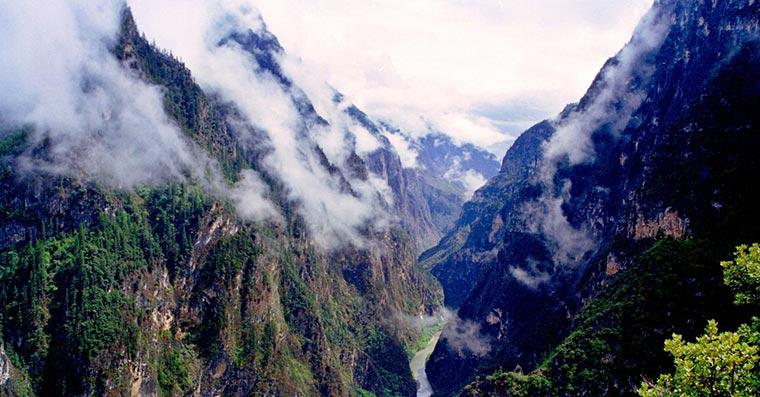
Amazing Balagezong Grand Canyon
6,2,2021 0
Pu’er Profile
4,5,2016 0