Detailed Introduction to Folk Costumes of Honghe
1. Regional & Cultural Context
Honghe includes:
Mountainous terrace regions (e.g., Yuanyang)
Border valleys and tropical zones (e.g., Jinping)
Market towns with long cross-border exchange history
Clothing here reflects:
Agricultural terrace life
Clan identity and subgroup distinction
Ritual traditions
Southeast Asian and borderland influence
Unlike many regions, traditional dress is still worn regularly in some rural Hani and Miao communities.
2. Hani (哈尼族) Costumes — The Visual Core of Honghe
Distribution
Particularly strong in Yuanyang, Lüchun, and Honghe counties.
Women’s Costume Structure
Jacket: Short, fitted indigo or dark-blue jacket with embroidered cuffs and collar
Skirt: Pleated or wrap skirt (usually dark base)
Apron: Highly decorated front panel with dense embroidery
Headwear: Large black or dark headwrap; in some subgroups silver ornaments or decorated caps
Legwear: Leg wraps are common in terrace-working communities
Decorative Features
Geometric embroidery
Stylized plant and animal motifs
Heavy use of silver jewelry in ceremonial contexts
Subgroup Differences
Yuanyang Hani: prominent headwrap and compact silhouette
Lüchun Hani: more elaborate embroidery
Honghe County Hani: varied skirt structures
Symbolism
Embroidery often reflects agricultural cosmology
Circular motifs symbolize harmony and cycles
Silver indicates festivity and status
3. Yi (彝族) Costumes in Honghe
Yi subgroups in Honghe are diverse and differ from Chuxiong Yi styles.
Common Features
Indigo base fabric
Embroidered chest panels
Pleated skirts
Decorative collar bands
Subregional Variation
Shiping & Jianshui areas: more refined embroidery
Southern mountain Yi: bolder geometric patterns
Yi costumes are typically worn during festivals such as Torch Festival and weddings.
4. Miao (苗族) Costumes
Particularly visible in Pingbian and border counties.
Key Characteristics
Pleated skirts
Extensive silver headdresses
Batik and cross-stitch panels
Layered aprons
Miao festival attire is among the most visually elaborate in Honghe.
5. Dai (傣族) Costumes
In southern counties such as Jinping.
Features
Bright silk tube skirts
Fitted blouses
Floral woven patterns
Light and tropical aesthetic
Influence from Southeast Asia is evident in textile structure and silhouette.
6. Yao & Zhuang Costumes
Present in smaller numbers but culturally significant.
Indigo base garments
Embroidered shoulder panels
Distinct headscarves
Ritual clothing for ancestor ceremonies
7. Materials & Techniques
Fabrics
Handwoven cotton
Indigo-dyed cloth
Silk in Dai communities
Hemp (older garments)
Techniques
Indigo vat dyeing
Cross-stitch embroidery
Satin stitch embroidery
Appliqué
Batik (Miao)
Silver crafting
Honghe is particularly known for preserving hand embroidery traditions.
8. Festivals & Contexts of Wear
Traditional costumes appear during:
Hani New Year
Torch Festival (Yi)
Miao New Year
Dai Water-Splashing Festival
Weddings
Terrace agricultural rituals
Ancestor worship ceremonies
Yuanyang terrace festivals provide one of the best opportunities to see full ceremonial Hani attire.
9. Where to See Authentic Costumes
Yuanyang Hani Terraces villages
Lüchun County rural festivals
Pingbian Miao villages
Jianshui cultural events
Honghe Prefecture Museum
County cultural heritage centers
Village contexts provide more authentic garments than tourist stage performances.
10. Preservation & Contemporary Adaptation
Active Preservation
Intangible cultural heritage listings
Embroidery cooperatives
Village-based workshops
Cultural tourism integration
Modern Influence
Embroidery incorporated into handbags and fashion
Simpl
Guide
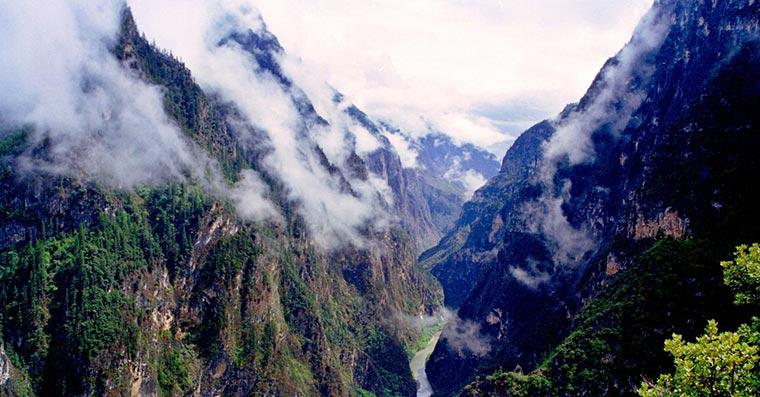
Amazing Balagezong Grand Canyon
6,2,2021 0
Pu’er Profile
4,5,2016 0