Detailed Introduction to Folk Costumes of Lincang
1. Regional portrait — why Lincang’s costumes matter
Lincang sits in southwestern Yunnan on the tea-mountain frontier and is ethnically diverse. Local dress reflects:
Tea-mountain & forest livelihoods (tea growers, swidden and terrace farmers, forest foragers),
Borderland exchange with neighboring prefectures and Southeast Asia,
Strong ethnic plurality — especially Dai, Lahu, Wa, Bulang/Blang, Jingpo, Lisu, Yi and Han.
Costume therefore ranges from bright lowland silks to indigo-dyed upland textiles and richly embroidered festival regalia.
2. Core materials & textile techniques
Fabrics: silk (Dai & higher-status pieces), cotton (most garments), hemp/ramie (older items).
Dyes: indigo vat-dying for dark blues/blacks; plant dyes (sappanwood, madder) and modern synthetic dyes for brighter pieces.
Techniques: hand-weaving (backstrap and simple looms), ikat/tie-dye and batik (resist) in lowland forms, dense hand-embroidery and appliqué in upland ceremonial wear.
Construction: pleating, tubular/wrap skirts, layered aprons, side-fastening jackets and inside-finished seams for higher-end pieces.
3. Major ethnic costume types — what to look for
Dai (lowland, bright silk)
Visual cue: bright, patterned tube/wrap skirts (long pha sin style), lightweight blouses, floral or ikat-like patterns.
Materials: silk or fine cotton; fine ikat/tie techniques where preserved.
Use: temple ceremonies, Water-Splashing Festival, weddings.
Where typical: lower valleys and riverine settlements across Lincang.
Lahu (upland, black with red trim)
Visual cue: predominantly black tunics or jackets with distinctive red/white collar or shoulder bands; men’s and women’s silhouettes are pragmatic.
Decoration: embroidered bands, sometimes simple appliqué.
Use: New Year, harvest festivals, weddings.
Where typical: upland villages and ridge settlements.
Wa (forest, indigo and patterned bands)
Visual cue: indigo/dark ground cloth with colored bands or patterned borders; headscarves or distinct turbans at festivals.
Character: garments are sturdy and often show tie-dye or woven band work.
Use: ritual dances and clan ceremonies.
Bulang / Blang (tea-people, understated)
Visual cue: sober, dark jackets and wrap skirts or trousers; emphasis on hand-woven cloth and functional cuts.
Character: minimal ornamentation—reflects forest/tea economy and practical needs.
Use: daily work wear and simpler festival variants.
Jingpo & Lisu (colourful, bold motifs in pockets)
Visual cue: where present, bold geometric appliqué, pleated skirts or richly banded jackets and ritual headgear.
Note: present in pockets near borders; festival costumes show the most ornament.
Yi & Han local variants
Visual cue: indigo bases, embroidered aprons and collars (Yi); Han folk dress in markets and festivals borrows local motif language.
4. Typical garment elements (parts to photograph)
Skirt types: tubular/wrap (Dai) vs. pleated or straight skirts (upland groups).
Jackets: short, side-fastening jackets or longer coats for highland wear.
Aprons & sashes: often the most decorated element—good indicator of identity.
Headgear: caps, wrapped scarves, turbans or small crowns—headwear often signals age/status.
Accessories: bead necklaces, small silver ornaments (festival), woven belts.
5. Motifs & symbolic language
Colors: indigo/black = everyday/work; red/yellow = festivity; white may be ritual-specific.
Common motifs: stylized birds/animals, floral scrolls, lozenges/stepped diamonds—these may encode lineage, protective symbols or fertility wishes.
Placement significance: chest panels, apron bands and headdress details carry the most social information.
6. When & where to see authentic wear
County markets & weekly fairs: best for encountering everyday and market festival dress.
Major festivals: Water-Splashing (Dai), Lahu New Year/harvest rites, Wa ritual dances, and local weddings—consult county calendars.
Tea-village homestays (Fengqing area / Ancient tea trails): very good for Bulang and Lahu household costumes.
County museums & cultural centres: curated examples and technical descriptions — useful before field visits.
7. Preservation status & tourism effects
Active preservation: local cultural bureaus and NGOs support weav
Guide
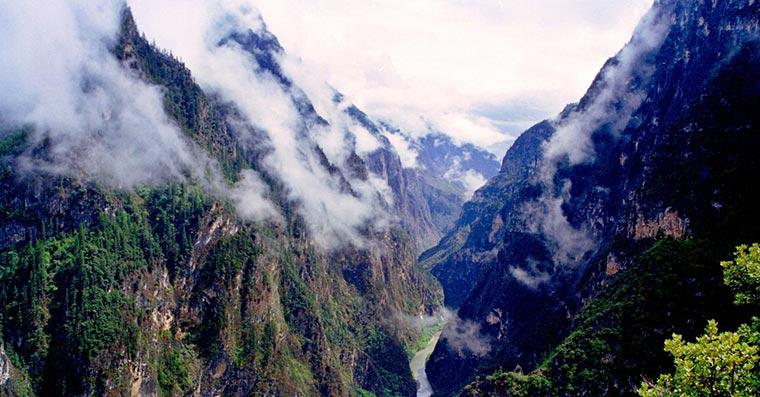
Amazing Balagezong Grand Canyon
6,2,2021 0
Pu’er Profile
4,5,2016 0